
GOVERNANCE
Task Force
WE NEED YOUR FEEDBACK!
Common Space's strategic governance framework is the product of a collaborative, community-driven process and critical infrastructure for our operations. Over the past several months, a global 40-person Governance Task Force of experts, co-chaired by Rhiannan Price & Denise McKenzie, discussed, debated, and pressure-tested a new path forward. While much work remains, these are foundational to mission success.
In keeping with our commitment to co-design with our community, we are sharing our task force's amazing efforts for a wider public contribution. We want your thoughts!
Your feedback is welcome between now and September 24th via email to hello@commonspace.world or in the comments box provided below the table.
Provide input on our policies:
Meet the Task Force
Our Governance Task Force brings together over 40 experts from humanitarian response, human rights, geospatial science, law, policy, and community leadership to help shape how this satellite is not just built but governed.
Their role is both practical and principled. They are co-designing the rules, structures, and safeguards that will determine how the satellite is tasked, how data is shared, and how risks are managed across complex, real-world scenarios. Through case studies, review cycles, and rigorous debate, they pressure-test our assumptions and help ensure the system is fair, transparent, and resilient under strain.
The Task Force is actively shaping a new model for Earth observation as public infrastructure: one where decision-making power is more distributed, access is more equitable, and the benefits of space-based data are anchored in the needs of communities on the ground.
Meet the incredible experts powering this systems change.
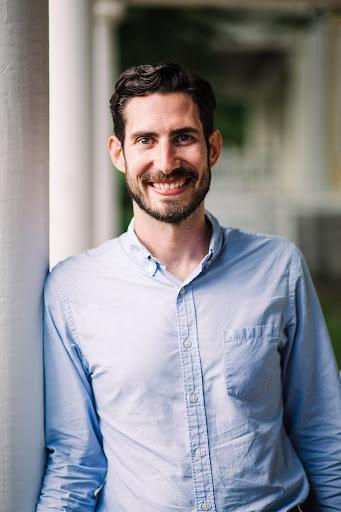
Aaron Eubank
Director of Data Science - Mercy Corps
Aaron Eubank is the Director of Data Science at Mercy Corps, where he advances the use of Earth observation, spatial analytics, and data science to support humanitarian and development programs. His work spans product development and implementation, geospatial and data strategy, and building scalable data systems. He holds an M.S. in GIScience from Clark University and has previously worked with the Humanitarian OpenStreetMap Team. Aaron brings a commitment to ethical, community-centered data stewardship and deep experience with both the promise and challenges of utilizing Earth observation for humanitarian ends.

University of Strathclyde
My research at the University of Strathclyde is focused on the use of Earth Observation data as a tool for accountability and social justice. My work examines the evidentiary value, limitations, and governance implications of satellite imagery in criminal and international legal contexts, and also as an independent verification layer against mis- and disinformation. In parallel, I explore governance models for space infrastructure through decentralised and Web3-based systems, including distributed satellite tasking and transparent validation of emergency alerts. As one of the founders of the SpaceDAO project, I work on approaches that embed accountability, auditability, and public-interest governance directly into the technical design of space-based data systems.

Dr. Evelyne Tauchnitz
University of Lucerne, Switzerland; Centre for International Governance Innovation (CIGI)
Dr. Evelyne Tauchnitz expertise focuses on Ethics, Technology & AI, Political Philosophy, Peace & Security, and Human Rights. She is a Senior Fellow at the Centre for International Governance Innovation (CIGI) and a Senior Lecturer at the Institute of Social Ethics, University of Lucerne, Switzerland. Evelyne is also Vice-Chair of the Panel on AI & Peacebuilding of the International Panel on the Information Environment (IPIE), a Research Associate at the Centre for Technology and Global Affairs (CTGA), University of Oxford. She holds a PhD in International Relations from the Graduate Institute of International and Development Studies (IHEID) in Geneva.

Independent Expert | Geospatial & Information Management Data Scientist | PhD Candidate, Data Science | Earth Observation and AI/ML for UN and Humanitarian Operations
Geospatial and information management data scientist with more than 13 years of international experience in satellite imagery analysis, geospatial intelligence, and information management across humanitarian, environmental, and security contexts. His work centres on the responsible use of Earth observation in public-interest settings — anticipatory action, early warning, disaster risk reduction, and climate resilience — across Latin America, the Caribbean, and Africa. He has led multisensor remote-sensing applications and information management workflows within the United Nations system, including with UNODC, WFP, IOM, UNHCR, UNICEF, and UNTMIS (formerly UNSOM), and with international NGOs. His technical expertise spans Python, GIS, remote sensing, UAV systems, and the integration of machine learning and AI for evidence-based decision-making. He is currently a PhD candidate in Data Science.

The Maven of Maps
Ekpereamaka Juliet Ibenegbu is a GIS Consultant at The Maven of Maps with over four years of experience applying GIS and remote sensing to climate resilience, urban development, and disaster risk management. She has led geospatial initiatives spanning sanitation planning, flood risk mapping, and environmental monitoring in collaboration with government and international partners. Juliet serves as Co-President of African Women in GIS and contributes to regional and continental geospatial networks. Her work bridges spatial intelligence, ethical data use, and inclusive participation, advancing sustainable, people-centered approaches to geospatial innovation across Africa and globally.

Development Seed
Kevin leads technical partnerships at Development Seed. He has over 20 years of experience in Earth Observation and a background in business development and product management. His focus is on cultivating and sustaining partnerships with organizations to build technology that has a positive impact.
Previously, Kevin worked on partnerships and product management at Maxar, specializing in new markets, including 3D and augmented reality. He is active in the OpenStreetMap community and a champion of open-source data and software. Kevin studied mechanical and aerospace engineering at Arizona State University. In his spare time, he enjoys astronomy, history, and physics, and he enjoys the outdoors in sunny Arizona.

Amnesty International
Micah has been conducting open source investigations using satellite imagery and other data sources for over seven years, working closely with researchers and journalists to uncover evidence of human rights abuses across the globe. Some past projects include near real-time monitoring and documentation of village burnings in Myanmar, tracking Boko Haram and military activities in Nigeria, monitoring and analyzing changes in North Korean gulags and supplying key evidence for an investigation into a Southeast Asian trafficking ring.
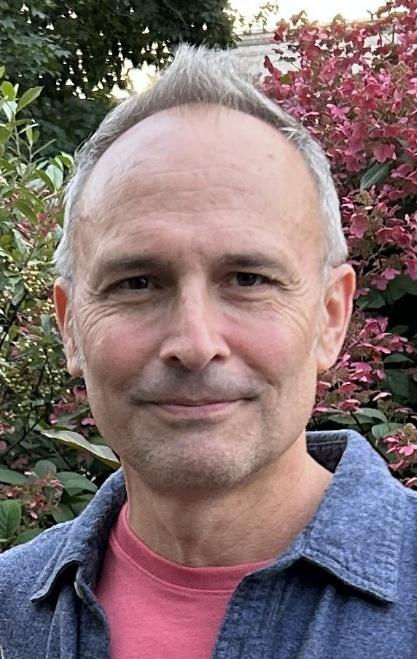
Hudson Passage
Timothy Stryker is Principal of Hudson Passage, LLC, advising clients on space policy and partnerships for a more secure and sustainable world. He has worked for the White House Office of Science and Technology Policy, the international Committee on Earth Observation Satellites, the U.S. Geological Survey, the National Reconnaissance Office, and National Oceanic and Atmospheric Administration. A Senior Fellow of the International Computer Science Institute, Tim has also advised the U.S. National Academies and the Keck Institute of Space Studies. He holds a Master’s in Foreign Service from Georgetown University and a Bachelor’s in History from the University of Michigan.
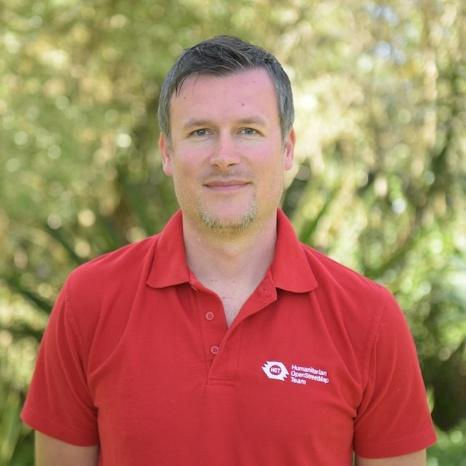
Humanitarian OpenStreetMap Team (HOT)
Cristiano Giovando is Senior Product Owner for Imagery Services at the Humanitarian OpenStreetMap Team (HOT), where he leads OpenAerialMap and works on open imagery access for humanitarian and development mapping. With over 15 years of experience in geospatial technology, remote sensing, and disaster risk management, he has worked with the World Bank, Asian Development Bank, and European Commission. His work focuses on open geospatial data platforms, satellite and drone imagery pipelines, and data sharing policy. Cristiano holds a Master's in GIScience from San Diego State University and a Bachelor's from Politecnico di Torino, Italy.

Akvo
Lotte is a Data Service Expert for Akvo with expertise in data governance, information systems, and humanitarian data infrastructure. She has led efforts to map vulnerability changes in WASH infrastructure for ICRC, translating complex data into actionable insights for crisis response. She has developed data management protocols and standards for Ministries of Water and Health across East Africa, strengthening institutional data governance at a national level. Lotte also applies satellite data in disaster risk reduction assessments and water information systems, bridging cutting-edge technology with evidence-based decision-making in some of the world's most data-scarce environments.

Empathize Innovation and Foresight
Paul Jurasin is Principal and founder of Empathize Innovation and Foresight and Emeritus Director, Cal Poly Digital Transformation Hub. He brings expertise in space systems, satellites, and geospatial data product development, paired with a strong track record in strategy and both internal and external entrepreneurship. Paul has led innovation initiatives across startups, academia, and global organizations, shaping forward leaning technology and transformation programs. He has collaborated extensively with public sector partners including USGS, the World Bank, and the U.S. Department of Agriculture to advance mission-driven, human centered solutions that address complex global challenges.

European Space Agency
Anna works at the intersection of space technology, crisis management, and cross-sector collaboration. In her current role, she is catalysing user-driven resilience projects at the European Space Agency. She brings more than 15 years’ experience spanning humanitarian operations, strategic partnerships, and public-interest satellite technologies. Previously, she was Programme Director at The Partnering Initiative, leading initiatives on philanthropic impact and transformational collaboration. Her humanitarian career includes senior roles with Norwegian Refugee Council and British Red Cross, with a particular focus on urban displacement, camp coordination and management, and community participation. She has been deployed across the Middle East, Afghanistan, and Ukraine.

ArdhSight Technologies
Rawaa is a geospatial scientist and consultant with 15 years of experience spanning geospatial analysis, humanitarian response and institutional decision-making. She has collaborated with UN agencies, public institutions and private sector partners to support initiatives like climate-security monitoring, child poverty modeling and crisis response in fragile and crisis-affected regions. As the founder of ArdhSight Technologies, Rawaa focuses on transforming earth observation data into practical insights aligned with local contexts to support better decisions.
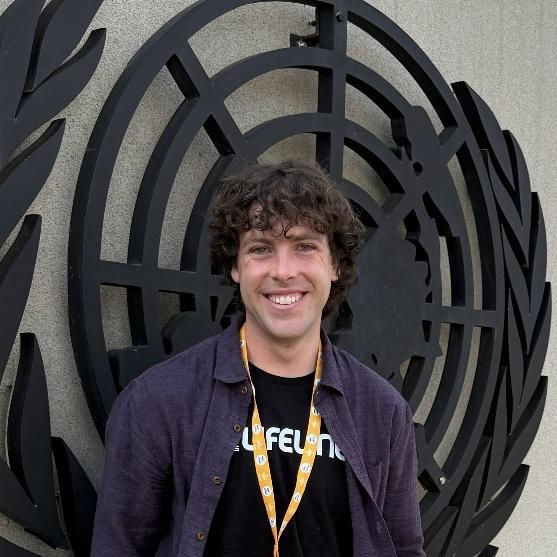
NASA Lifelines
Seamus is a program manager for NASA Lifelines, working with experts across sectors and geographies to improve how Earth observation data and tools are used for more effective and equitable humanitarian action. He brings experience applying open-access satellite and geospatial data to decision-making and locally sustained capacity building in global health, sustainable development, and humanitarian response. He also supported the development of RAMP, an open-source deep learning model that accurately digitizes buildings from satellite imagery in low- and middle-income countries, now adopted by HOTOSM and other organizations for local implementation.

Consilient Research
Tyler Box is a quantitative research specialist with over a decade of experience evaluating humanitarian programs in Sub-Saharan Africa. He currently leads quantitative research for the UK’s humanitarian programming in Somalia and Somaliland, where he applies geospatial data and satellite imagery to support monitoring, evaluation, and program design. Previously, he worked in USAID’s Office of Learning, Evaluation and Research, helping integrate geospatial analysis into evaluations of development programs. His work focuses on how remote sensing can inform decision-making and improve accountability in humanitarian and environmental programming.

Brian Perlman
United Nations
Brian Perlman is a satellite imagery analyst focused on remote sensing for human rights investigations and humanitarian contexts. His work primarily focuses on satellite-based remote sensing methods to study armed conflict, civilian protection, and International Humanitarian Law. His previous work has covered conflict in the Gaza Strip, Lebanon, Ukraine, Sudan, Iran, and elsewhere. He has co-authored two peer-reviewed publications, serving as first author on a journal article concerning WASH infrastructure damage in Gaza. A Fulbright scholar, he is a member of the Decentralized Damage Mapping Group and the NASA Lifelines Earth Science Review Board; he is a NASA Lifelines Research Fellow.

Independent Expert
From Kabul to Geneva to Palo Alto, Joel Myhre has led technology engagement efforts for public health, environmental, and disaster response entities for over two decades. His geospatial endeavors include Membership in the UK Royal Institution of Chartered Surveyors (MRICS) and co-chair of the UN Information Management Working Group for GIS. He currently leads GIS innovations for the California Department of Pesticide Regulation (CDPR), having previously furthered open data for the State of California. Previous collaborations include advising the EOC-NET at WHO, and advancing humanitarian innovation with the Danish Refugee Council in Copenhagen and the Pacific Disaster Center (PDC) in Hawaii.

Geospatial Engineer, Kenya
Nelson Mwova is a Geospatial Analyst, researcher, and community development practitioner based in Kenya, with a background in Geospatial Engineering, Space Systems, Community Grants, and Project Management. He specializes in leveraging open geo-data to address climate resilience, sustainable resource management, and disaster response.
He currently serves as Co-Lead within the Humanitarian OpenStreetMap Team (HOT) Activation Working Group and is a data contributor within HOT’s ESA Hub. He is also involved as the lead of the GIS-PNHRA project within the Space Generation Advisory Council STEA programme. He brings strong skills in open data use, community impact, and regional data context.

Independent Researcher, and Senior Geospatial Data Scientist & Earth Observation Specialist at AstraTerra
Gijs van den Dool is a Senior Geospatial Data Scientist and Earth Observation Specialist at AstraTerra, where he also serves as a Board Advisor. His expertise lies in applying machine learning and satellite data to transform Earth Observation into actionable intelligence for policy, risk management, and decision-making. He has extensive experience across insurance, environmental consulting, and climate risk, with a focus on making emerging technologies accessible. At AstraTerra, he currently works on digital twin–enabled decision-support systems for urban heat island mitigation and researches wildfire risk modelling at the wildland–urban interface, where climate impacts intersect with urban growth and infrastructure.

FAO
Aurélie is Chief Technical Advisor at the Food and Agriculture Organization of the United Nations (FAO) since January 2021, managing a project assessing forest cover change and the associated direct drivers in Central Africa. She was formerly the Senior Remote Sensing Specialist for the World Wide Fund for Nature (WWF), where she developed and applied innovative satellite and aerial remote sensing for conservation projects worldwide. Aurélie has a PhD in Natural Sciences from Humboldt Universität-zu-Berlin and received a Master's in Environmental Management from Duke University's Nicholas School of the Environment in 2001 and a Bachelor of Science from McGill University in Canada in 1999. Aurélie lives and works in Berlin, Germany.

Clark University
Hamed Alemohammad is an Associate Professor in the Graduate School of Geography and Director of the Center for Geospatial Analytics at Clark University. He is an interdisciplinary scientist with expertise in remote sensing, earth science, and artificial intelligence (AI). Prior to Clark University, Hamed was the Chief Data Scientist and Executive Director at Radiant Earth Foundation where he championed open-access data protocols and repositories for geospatial data and AI models. He also serves as a member of the Technical Advisory Committee of Digital Earth Africa. Hamed received his Ph.D. in Civil and Environmental Engineering from MIT.

Oxford Marine Protection Group
Hansa is the Director of the Oxford Marine Protection Project, which works at the intersection of marine and national security. In partnership with WWF, the project is supporting the Cagayancillo MPA in the Philippines, one of the largest marine protected areas in the world, spanning one million hectares in the heart of the Coral Triangle. Hansa is a Rhodes Scholar specializing in remote sensing to monitor environmental risks and inform climate policy. In 2025, she worked with the COP30 Presidency on developing the five year agenda and has consulted on climate resilience with the UN OCHA.

Independent Expert
Jonathan Drake has over twenty years’ experience in both terrestrial and planetary remote sensing, with a particular emphasis on the ways in which technologies from these fields can be used to benefit the greater good. He was most recently a Senior Program Associate with the AAAS Scientific Responsibility, Human Rights and Law Program. He’s also a former research assistant at the Space Telescope Science Institute and the Hawai'i Institute of Geophysics and Planetology. At AAAS he investigated the applications and implications of emerging technologies and data products in a human rights and humanitarian context. Through his work with the Program, he provided training to multiple human rights organizations, as well as international courts and commissions on the ways in which technology can be used to advance human rights documentation. He holds a Master of Science (M.S.) in Geology from Arizona State University (2008) and a Bachelor of Science (B.S.) in Physics (with honors) from Dickinson College (2004).

Independent Expert
Dr Mukund Kadursrinivas Rao specialises in Earth Observation (EO), Geographical Information Systems (GIS) and space. With an MSc Geology, MPhil in RS and GIS and PhD in RS and GIS background, Dr Rao has ~45 years of unique government, industry and not-for-profit experience. Dr Rao has held leadership positions in Indian Space Research Organisation (ISRO) and been Chief Executive in several private Industry. He has diverse international experience - in multi-lateral agencies, UN and industry of USA/Middle East, Japan and a diverse portfolio of designing and managing 100+ large applications projects till date. He presently provides Strategy, Advocacy & Consulting services in design and development of EO analysis systems, spatial information systems, GIS Portals – specifically in agriculture for farmers, sustainable development, NR Management, land management, property taxation, urban management, SDI and other sectors.

Independent Expert
Jenna is a human rights violations and atrocity crimes investigator and served as the Head of the Crimes Against Children Unit at OSINT For Ukraine. She’s also an Open Source Investigation and Geospatial Analysis Expert with Justice Rapid Response and an OSINT Manager with Global Weekly. She was previously with the United Nations and the Centre for Information Resilience. She holds an LLM in International Human Rights and Humanitarian Law from the University of Essex. Jenna is a member of the American Society of International Law and is an Executive Committee Officer for the Lieber Society on Law of Armed Conflict for the 2025-2028 term. She is also a member of the following chapters and interest groups: Human Rights, International Courts and Tribunals, International Criminal Law, and Women in International Law.

University of New Haven
Michelle is an Assistant Professor at the University of New Haven in the Department of Criminal Justice at the Henry C. Lee College of Criminal Justice and Forensic Sciences. Her broad research focuses on understanding patterns of behavior in international and transnational crime with an emphasis of looking at illicit economies like cultural property crime and human smuggling. More specifically, she is interested in the development of and structural changes within illicit economies and assesses how they are influenced by micro- and macro-level factors.
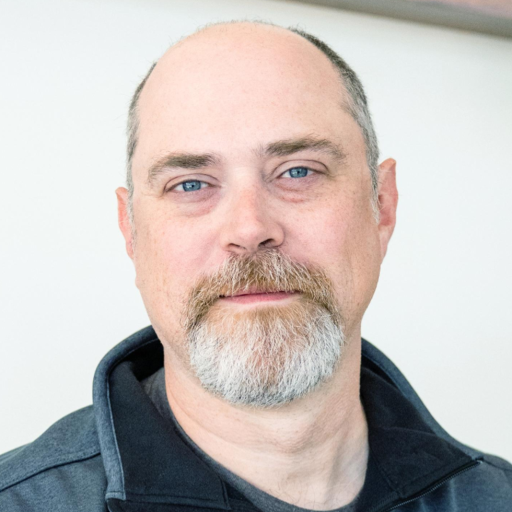
LGND AI
Matthew Hanson is the Geospatial Engineering Lead at Element 84, where he works with the small-sat industry and government satellite programs to develop open standards and software to support scalable, open science. With over 25 years of experience in remote sensing, machine-learning, and imaging processing, Matthew is a contributor to multiple open-source geospatial projects.

Abaca Labs
Robert Cheetham founded Azavea, a B Corporation that develops new geospatial technology and applies it for civic, social, and environmental impact. Over the past 15 years, Robert has led dozens of geospatial software projects and has served as Principal Investigator on research grants from the National Science Foundation, NASA, US Department of Energy, US Department of Agriculture, and the National Institutes of Health. Prior to founding Azavea, he served as a software developer and GIS analyst for the University of Pennsylvania, the City of Philadelphia and the Philadelphia Police Department and as a civil servant in Japan. He has an MLA in Landscape Architecture and Regional Planning from the University of Pennsylvania and a BA in Japanese Studies from the University of Michigan.

World Food Programme
Pedro is a former European Space Agency engineer and United Nations World Food Programme humanitarian, working at the intersection of space innovation and humanitarian action to strengthen emergency preparedness, disaster response, and resilience worldwide.
My expertise spans GIS, earth observation, emergency response, and the management of humanitarian operations. I advise UN agencies, NGOs, and private sector partners on how technology can be integrated into humanitarian solutions. Alongside this work, I teach masterclasses at universities and share ideas as a TEDx speaker.

HOT - Conflict & Displacement Lead
Jessie is a geospatial professional with over 15 years of experience in the public and humanitarian sectors. After an early career with the State of Utah supporting the state's open geographic database and managing GIS projects, she transitioned to the humanitarian sector in 2017. Leading GIS and remote sensing for assessments in Syria and Iraq with IMPACT Initiatives deepened her appreciation for the power of maps to communicate and bring people together.
Currently, Jessie is the Conflict & Displacement Program Lead at HOT, working with conflict-affected communities and the global OSM network to improve spatial data availability to track conflict impacts, and overseeing HOT's responsible and ethical data framework. She holds a BA in Anthropology and a Professional Master of Science and Technology in GIS.

Carnegie Mellon University Africa
Deogratius Kiggudde is a distinguished professional with a wide humanitarian and development program management background, starting off in civil construction residential households and roads in Uganda, and then moving into the open data and infrastructure ecosystem where he interacted with multiple digital public goods, and infrastructure projects across Africa.
Before joining Carnegie Mellon University Africa, Kiggudde served as the senior program manager for technology and implementation at the Humanitarian OpenStreetMap Team (HOT) in the Eastern and Southern Africa Hub. Deogratius holds a bachelor of science degree in quantity surveying, a postgraduate diploma in monitoring and evaluation and a PMI project management professional certificate. His professional journey is underscored by his enthusiasm for open data infrastructure, agriculture, construction, and the integration of open technology in these domains.

Vertical52
Michael Anthony is co-founder of Vertical52, enterpreneur and specialist in data technology. Michael began his career as a journalist for several German outlets, reporting from Israel and the Palestinian territories and documenting life in conflict zones. Now his work aims to support accountability and informed action, lying in the intersection of technology, transparency, and environmental justice.
Since 2010, he has worked as an entrepreneur with geospatial data in different contexts, from fragile ecosystems to investigative projects. As co-founder of Vertical52, he now helps journalists access and analyse satellite imagery to uncover events in inaccessible regions and strengthen accountability.
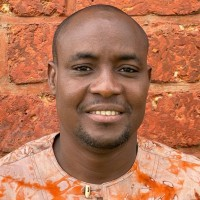
Akvo
Rabdo Abdoulaye is a Project Manager for Special Projects at Akvo Foundation in Ouagadougou, Burkina Faso, specializing in data, digitalization, and monitoring for development projects. He has a strong background in GIS, biodiversity, and forestry management, previously working with CIFOR and supporting West African sustainability initiatives.

Rochester Institute of Technology
Dr. Kerekes is a Research Professor of Imaging Science at RIT and has worked throughout his career on advancing the state of the art and practice of remote sensing technology through theoretical investigations, data analyses, and modeling of remote sensing systems. His interest has been in viewing the end-to-end remote sensing process as a system with application performance as the system metric. Developing models with this perspective has improved understanding of parameter sensitivities and requirements for system design and operation. His work has emphasized the use of statistical parametric models in propagating the information bearing characteristics of the scene through the effects of the remote sensing process. He has applied this approach to the study of multispectral remote sensing systems designed for surface land cover classification, the vertical profiling of atmospheric temperature and water vapor, the sensing of surface particulate matter and for unresolved (sub-pixel) object detection and identification. He has also investigated the use of spectral imaging for medical applications.

UK Space Agency
Lucian Smith is a Future Technologies Strategy specialist at the UK Space Agency focused on leveraging Earth Observation (EO) satellites and local innovation to enhance humanitarian action and resilience in the Global South. With over 10 years of experience spanning anthropology, global risk intelligence, and product development, he bridges technology and human-centric solutions.

PAX
Wim Zwijnenburg is a Humanitarian Disarmament Project Leader for the Dutch peace organisation PAX. His work focuses on emerging military technologies and their impact on how wars are being fought and consequences for arms proliferation. He is the author of the reports Does Unmanned Make Unacceptable, Armed & Dangerous, Unmanned and Uncontrolled and Unmanned Ambitions.
Wim is coordinator of the European Forum on Armed Drones, a network of civil society organisations working to address concerns over use and proliferation of military drones. He conducts research and advocacy on the environmental dimensions of armed conflicts. He developed a methodology on assessing environmental impacts of conflicts using remote sensing and environmental open-source investigation techniques. For his work on this subject, he received the UNEP/OCHA Green Star Award in 2017 for his work on environmental preparedness in emergencies, and the Environmental Peacebuilding Association's 2023 Al Moumin Award. He published various reports on the topic on Syria and Iraq and does advocacy work in the UN Security Council and UN Environment Assembly. He is a frequent contributor to the open-source investigative journalism collective Bellingcat and a contributor to the Wilson Center's New Security Beat initiative. He holds a Masters in International Development Studies from the Radboud University Nijmegen and received a Philosophy scholarship from the Thomas More Foundation.

President, Center for Strategic Development Studies (CSDS)
Abdallah Mejri is a Governance, Risk & Compliance (GRC) Advisor, ESG Counsel, and President of the Center for Strategic Development Studies (CSDS). With over a decade of cross-sector experience, his work focuses on the intersection of international law, geopolitical risk mitigation, and the Humanitarian-Development-Peace (HDP) Nexus. Within the Common Space Governance Task Force, Abdallah advises on strategic frameworks regarding sovereign liability and the "Compute Divide," and pioneered the policy framework for utilizing Very High-Resolution (VHR) satellite imagery as a neutral evidentiary baseline for Customary International Water Law compliance. He concurrently serves as an Expert Reviewer for the Intergovernmental Panel on Climate Change (IPCC) and an AI Governance Analyst at the Center for AI and Digital Policy (CAIDP). Abdallah holds LL.M. degrees in International Relations and Environmental Law, and reinforces his strategic oversight with certified execution frameworks as a Project Management Professional (PMP®).