
Meet
COMMON
SPACE
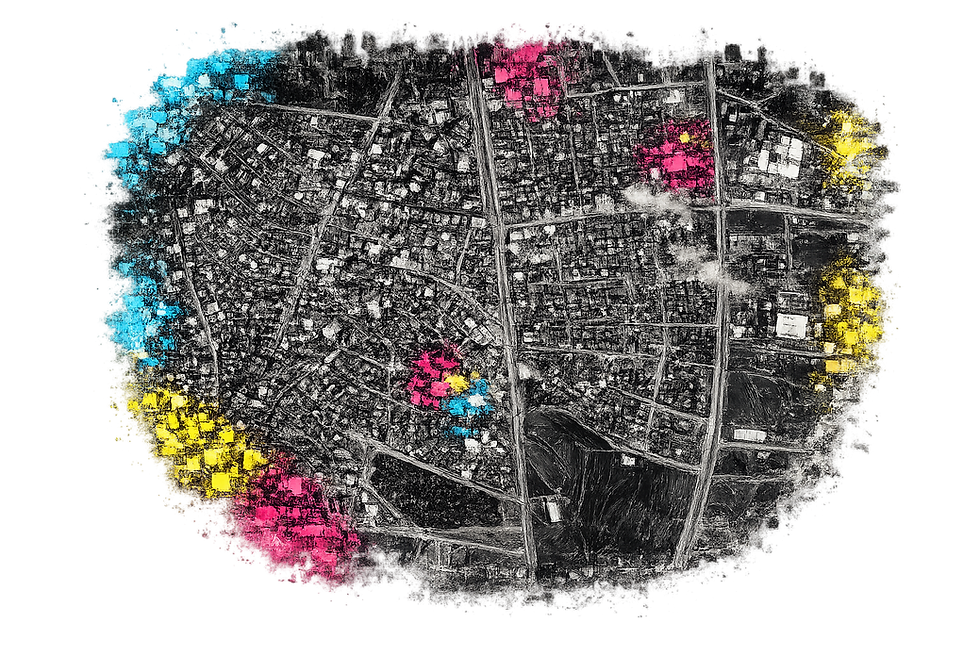
We're a nonprofit 501(C)(3) with a mission to realize an independent high-resolution satellite mission to support the world's most pressing challenges. Satellites are more sophisticated and affordable than ever, and now is the right time for an independent satellite mission. It is the best option to address the persistent lack of access to high-resolution data for the public good.
We know that open, high-resolution satellite imagery, when tasked over areas of high need at the right times, can positively impact the most vulnerable. Our goal is to democratize access to this valuable data by owning our own constellation.
Our
VALUES

01
Human Agency
Communities know what serves them. Technology should build local capacity, not dependency. Fairness is designed into systems, not delivered as charity. Self-determination includes how imagery is used.
02
Independence
Neutral by design. Free from political, military, or commercial control.
03
Transparency
Clear documentation. Open imagery, licensing, and tasking. Expanding visibility without increasing vulnerability.
04
Optimistic Curiosity
Exploring better futures through experimentation, innovation, and a belief that technology can advance equity.
05
Stewardship
Servant leadership and shared decision-making. Redistributing power, minimizing harm, maximizing public value.
Meet Our
ANCHOR PARTNERS

We’re proud to be backed by anchor partners who see what’s possible when critical data becomes public infrastructure: the Kluz PeaceTech Prize, Unorthodox Philanthropy, and Taylor Geospatial Institute. Their early belief and support are helping transform an ambitious idea into a shared, community-powered reality.


Bill Greer
Co-Founder
Bill brings a wealth of experience in satellite mission planning and technical implementation. As a veteran of Esri, Albedo, and Maxar, his knowledge of satellite systems will be instrumental as the study evaluates technical requirements and available products. Bill has worked at the most pioneering dual-use startups as well as the industry giants while advocating for using spatial tools and data to improve the real world. He has seen the value of open data, open methodologies, analytics, and data-driven decisions in the field to make life-saving interventions. Bill was deployed to the front lines in Kurdistan during the Yazidi genocide in 2015 and deployed to Bamako, Mali in 2018 for counter-trafficking efforts using drones, and satellite imagery to help humanitarians on the ground.
Rhiannan Price
Co-Founder
Rhiannan is a recognized leader in applying satellite imagery and Earth observation to advance humanitarian action, human rights, climate resilience, and sustainable development. As Co-Founder of Common Space, she leads the organization's governance, partnerships, and fundraising. Previously, she designed and led NASA Lifelines, a community-building initiative bringing together scientists and humanitarians to accelerate the use of Earth observations for our most pressing crises. She also serves as an advisor to NASA through their Applied Sciences Advisory Committee and is a former advisor to the International Criminal Court’s Office of the Prosecutor. Previously, she led the global sustainable development and humanitarian portfolio at Maxar Technologies and founded their Open Data Program. She's an expert in building unlikely coalitions and turning ambitious ideas into action.

Meet The
FOUNDERS
FAQs

The availability of high-quality satellite imagery has increased dramatically in the past decade, but the majority of these assets are still controlled by governments and commercial interests. Humanitarian organizations, civil society groups, researchers, and local communities often lack the access, resources, or influence needed to obtain timely imagery when it matters most.
Common Space is working to address this gap by developing a community-governed satellite mission designed to prioritize humanitarian, environmental, and public-interest uses of Earth observation data. The goal is to make critical information about our planet more accessible, more accountable, and more aligned with public good outcomes.
Most commercial satellite companies are optimized for government and commercial customers, which naturally shapes pricing, access models, and tasking priorities.
Common Space is designed around a different premise: that some forms of Earth observation should also function as public infrastructure. This includes: (a) governance informed by the global user community; (b) mission priorities aligned with public-interest needs; (c) a commitment to transparent policies around access and use, and (d) partnerships across civil society, academia, and humanitarian networks
Common Space is building a high-resolution optical Earth observation satellite designed specifically for humanitarian use. The initial system will focus on sub-meter imagery using a core payload of panchromatic, RGB, and near-infrared sensors, enabling detailed analysis of infrastructure, environmental conditions, and crisis impacts. Rather than aiming for full global coverage, the mission is being designed as a targeted, taskable system optimized for rapid response in areas of greatest need, with the ability to scale over time and integrate additional capabilities through partnerships.
The system draws its design criteria from our community demand report and will focus on: high-quality imagery suitable for analysis, reliable global coverage, efficient tasking and data delivery. Mission specifications are being refined in collaboration with technical partners.
Existing commercial providers are an essential part of the Earth observation ecosystem, and Common Space intends to work alongside them whenever possible.
However, several structural gaps remain:
-
humanitarian organizations often struggle with cost and licensing barriers
-
tasking priorities are typically shaped by government or commercial demand
-
long-term access and transparency are not guaranteed
A mission designed from the beginning around public-interest objectives can address these structural challenges while still collaborating with commercial providers.
-
It’s a fair challenge, and one we’ve taken seriously from the start. The question isn’t just whether to invest, but what kind of infrastructure actually changes outcomes. Right now, billions are already spent on satellite systems (and tens of millions are spent by donors for limited access to some data), but access to timely, high-resolution data remains constrained by cost, licensing, and priorities that often exclude humanitarian needs. Common Space is about redirecting a relatively small amount of capital toward shared, open infrastructure that can be used again and again across crises, geographies, and sectors. In that sense, it’s less like a one-off investment and more like building a public utility for decision-making - one that can improve how resources are deployed, how risks are understood, and how accountability is upheld at scale.
The mission is being designed with values-based governance at its core. Our values include: human agency, transparency, independence, stewardship, and optimistic curiosity. We’ve prioritized humanitarian principles within our own values and approach. We also ensure representation from humanitarian, civil society, and technical communities to inform decision-making. The objective is to create a system where decisions are not made solely by the entity operating the satellite, but informed by the broader community that relies on the data.
All Earth observation systems carry the potential for misuse. Common Space addresses this risk through responsible licensing frameworks, ethical use policies developed with community input, safeguards against harmful applications, and transparent governance structures capable of responding to concerns. The mission is grounded in a “maximize public benefit while minimizing harm” philosophy.
While the specific processes are still being shaped through our Governance Task Force, this could include clear use restrictions, tiered access for sensitive data, community review mechanisms, rapid response protocols for misuse, and the ability to suspend or revoke access when harm is identified.
Common Space is intentionally designed to prioritize civil and humanitarian use. Our governance, access, and licensing frameworks will reflect that commitment from the outset. Access to imagery may require adherence to clear ethical use agreements grounded in a “do no harm” mandate, alongside restrictions on uses that could contribute to violence or harm.
While the specific mechanisms are being developed through our Governance Task Force, this could include vetting of users, tiered or conditional access for sensitive contexts, and the ability to suspend or revoke access if misuse is identified. The goal is not just to expand access, but to do so responsibly, in ways that uphold the mission and protect the people most affected by how this data is used.
The system is being designed to support a wide range of users, including but not limited to: humanitarian organizations, civil society groups, journalists and investigators, academic researchers, and public sector institutions working in humanitarian contexts.
Tasking processes will ensure that requests are evaluated fairly and transparently. The Governance Task Force is currently developing our tasking protocol.
The mission is intended to support many different public-interest uses of Earth observation data. There are a wide range of humanitarian and community applications this imagery can support, including but not limited to: disaster response and damage assessment, monitoring climate and environmental change, tracking infrastructure damage in conflict zones, documenting human rights violations, supporting food security and land-use analysis, enabling scientific research.
The mission architecture is being designed to support rapid data delivery, recognizing that timeliness is critical in humanitarian contexts.
Delivery timelines will depend on several factors, including orbital geometry and ground infrastructure. However, the goal is to provide imagery within hours to a short timeframe after collection, rather than days or weeks.
Common Space aims to maximize accessibility while maintaining safeguards against misuse. Some imagery may be made openly available, particularly for research or environmental monitoring. Other imagery may require user registration or adherence to terms of use to ensure responsible application. The access model will balance broad availability with responsible governance.
The initial mission may begin with a small number of satellites, with the potential to expand over time depending on funding and demand. Starting with a focused system allows the mission to validate governance and access models, demonstrate real-world impact, and scale responsibly as the community grows. We also hope to explore partnerships with other providers to unlock more openly-licensed imagery for the public good.
Yes. While the initial focus is on optical imagery, future expansions could explore additional capabilities such as: radar imaging for all-weather monitoring, thermal sensors for environmental analysis, multispectral or hyperspectral data for agriculture and climate research. The long-term vision is to support a diverse ecosystem of Earth observation data serving public-interest needs.
Humanitarian organizations are central to the mission. The goal is not to build a system for humanitarians, but with them so that it reflects real needs, real constraints, and ultimately, delivers real impact where it matters most. From the outset, humanitarians have helped define the mission itself. Through our community demand survey, they informed core requirements, from priority use cases to the critical importance of open licensing and timely access. Their input has directly shaped how we think about what this satellite must do and who it must serve.
Today, that engagement continues to deepen. Humanitarian partners are contributing letters of support to help bring the mission to life, serving on our Governance Task Force to shape how the system will operate, and actively spreading the word to build a broader coalition around the need for a humanitarian-first satellite.
As Common Space becomes operational, these same organizations will play a central role as both decision makers and users. This includes helping define tasking priorities, shaping protocols and safeguards, developing and testing analysis workflows, and using the data in real-world contexts to inform action.
Yes. Private companies play a crucial role across the entire value chain, from building and launching satellites to data hosting, access, and developing downstream applications. Common Space expects to collaborate with industry partners across all of these areas, and we are already receiving letters of support from leaders across the private sector.
Beyond technical contributions, the private sector can also play an important role in sustaining the mission. This could include participation in a “club good” or membership model, where companies help financially support ongoing operations while benefiting from access to openly licensed imagery for their own products, services, and research.
This approach helps create a more durable, shared infrastructure: one where public-interest data remains broadly accessible, while those who derive value from it contribute to keeping it available. The goal is to align incentives so that commercial innovation and humanitarian impact reinforce each other, rather than compete.
To support the up front capital costs, largely build and launch of the satellites, Common Space is raising philanthropic support. Once operational, we plan to have an independent income stream from private sector memberships, given the value of our imagery to their priorities as well. Diversifying funding sources helps ensure that the mission remains independent and resilient.
Success means shifting satellite data from something scarce and gated to something reliable, accessible, and actionable for the people who need it most.
At a practical level, it means:
-
communities affected by crises have greater visibility, voice, and support
-
humanitarian organizations can reliably access timely, high-resolution imagery when decisions are most critical
-
civil society and journalists can use Earth observation data to strengthen transparency and accountability
-
researchers can study global challenges with better, openly available information
But the real measure of success is in what that access unlocks. Open, timely imagery enables faster and more effective response, better preparedness before disasters strike, and more resilient communities over time. It supports more innovative and inclusive research by lowering barriers to entry, allows analytics to scale through AI and shared data, and creates a common operating picture that more actors can use to coordinate and act.
Ultimately, success is not just access to data, but better decisions, stronger systems, and more lives protected because that data exists and is in the right hands at the right time.
-
Over time, Common Space aims to help establish a new model for Earth observation in which critical planetary data functions as shared public infrastructure rather than a narrowly controlled commodity. This vision is about unlocking the vast, largely unrealized public value of satellite imagery, especially for communities who have historically been excluded from access. When this data is open, timely, and usable, it becomes a foundation for better decisions, stronger local agency, and more equitable outcomes across humanitarian action, sustainable development, climate resilience, and human rights.
A key part of this future is building the capacity to actually use the data. That means growing the ability of public sector institutions, civil society, and local organizations to access, analyze, and apply Earth observation in their daily work, turning imagery into insight and insight into action. Advances in AI and machine learning will accelerate this transformation. With open datasets to train on and shared tools to build from, analysis that once took weeks can happen in near real time, patterns can be detected at scale, and insights can be generated and shared far more quickly than ever before.
If successful, Common Space will not stand alone. It will help catalyze a broader ecosystem of missions, partnerships, and tools that expand access to Earth observation and embed it as a core layer of global public infrastructure, powering a future where data is not just more available, but more useful, more inclusive, and more impactful for the public good.
Common Space is being designed as an independent, nonprofit mission with international governance. Our structure emphasizes:
-
Global representation in governance, including humanitarian practitioners, civil society, and technical experts
-
Transparent tasking and data access policies developed with the community
-
Operational independence from government or commercial interest
Like any satellite operator, we must comply with applicable licensing regimes. However, our governance design ensures that policy decisions about access, tasking priorities, and use of the imagery are guided by humanitarian principles and international norms, not national political priorities. Our goal is to create a mission that operates in the public interest of humanity, similar in spirit to other global public goods in Earth observation.
-
We assume that policy and political pressures are inevitable in any space system that increases transparency around conflict and environmental harm, to name just a couple sensitive areas.
Our approach includes:
-
Robust governance and advisory structures including legal, humanitarian, and technical expertise
-
Transparency in policy decisions so actions are explainable and consistent
-
Distributed partnerships and infrastructure to reduce reliance on any single jurisdiction
-
Proactive engagement with regulators and international institutions
Risk identification and mitigation is a key part of our mission design process and approach throughout.
-
Common Space is structured as a mission-driven nonprofit initiative, not a political advocacy organization. Our activities focus on data access, humanitarian analysis, and transparency, which are widely recognized as legitimate civil uses of satellite imagery.
Protection measures include: governance structures that distribute decision-making, clear legal compliance frameworks, institutional partnerships that provide legitimacy and resilience, and transparency in policies and operations. Our goal is to ensure that individuals involved are operating within established international norms for civil Earth observation and humanitarian support.
We recognize that where data is stored, processed, and governed is not just a technical question, it is fundamental to trust, access, and legitimacy. This is especially true for humanitarian and civil society users operating across different political and legal contexts.
Our objective is to design an infrastructure and governance approach that prioritizes resilience, neutrality, and global accessibility. This will likely include distributed cloud infrastructure across multiple jurisdictions, adherence to major international privacy and data standards, and clear, transparent policies for how imagery is stored, processed, and accessed. GDPR-aligned systems may be part of this, but the approach goes beyond any single regulatory framework.
There are emerging precedents for this kind of model. For example, GAIA-X is working to create a federated, sovereign data infrastructure across Europe, allowing data to remain governed under local rules while still being accessible across borders. Gaia-X defines a reference architecture and a “Trust Framework” that ensures interoperability and transparency among participants. It does not host data itself but specifies how services (e.g., cloud, edge, or data platforms) must interact using standardized interfaces and open-source components. Similarly, initiatives from the International Committee of the Red Cross have emphasized data responsibility and sovereignty in how sensitive humanitarian data is managed and shared.
Common Space builds on these principles. By avoiding reliance on a single jurisdiction and embedding governance into how the system operates, we aim to reduce geopolitical risk, increase resilience, and ensure that data can be accessed and used in ways that respect local contexts while serving global public needs.
Like all satellite operators, Common Space will operate within existing legal and regulatory frameworks, including national licensing regimes and international law. Depending on how the system is structured, this could include regulatory oversight across multiple jurisdictions, from where the satellite is built and launched to where operations, data processing, and distribution are managed.
We are intentionally exploring a distributed model for both infrastructure and governance. This could mean diversifying where key components of the system are licensed, operated, and hosted, rather than relying on a single country’s regulatory framework. The aim is to reduce dependency on any one jurisdiction, increase resilience, and better align with the mission’s global, public-interest focus.
At the same time, we recognize that certain restrictions, such as shutter control or data holdbacks in conflict zones, may still apply under specific regulatory regimes. Within these constraints, Common Space is designed to maximize transparency and equitable access wherever possible. Our guiding principle is that imagery which can support humanitarian response, civilian protection, and environmental monitoring should be made accessible to those working to protect lives and rights.
To support this, we will establish clear, publicly documented policies on access and use, along with distributed technical and governance mechanisms that help prevent single points of failure or unilateral restriction. The goal is not to bypass legal obligations, but to thoughtfully design around them, ensuring that the system remains as open, reliable, and mission-aligned as possible even in complex geopolitical contexts.
Our goal is not to compete with existing providers, but to fill critical gaps in public-interest access to Earth observation data. Many commercial providers are designed to serve government and commercial markets, which can shape where and how imagery is made available. Common Space is intentionally built to prioritize humanitarian organizations, civil society groups, journalists, researchers, and other public-interest users.
In some cases, imagery availability is limited not just by technical constraints, but by policy or business decisions. For example, companies like Planet Labs have, at times, imposed restrictions or limited distribution of imagery over sensitive regions such as Iran or parts of the Middle East, particularly during periods of heightened conflict. These decisions are often driven by a mix of regulatory caution, risk management, and commercial considerations.
Common Space is designed with a different mandate. We do not intend to impose broad, opaque restrictions that limit visibility in ways that undermine humanitarian response or accountability. At the same time, we recognize that open access must be paired with responsibility. Our approach is to enable access in sensitive contexts in ways that are safe, intentional, and grounded in a “do no harm” principle, ensuring that imagery supports civilian protection without increasing risk.
In practice, that could include safeguards such as context-aware access controls, ethical use agreements, and coordination with trusted humanitarian actors in high-risk environments. The aim is to expand transparency and access where it matters most, while taking seriously the responsibility that comes with making the world more visible.
If operational today, Common Space would be supporting near real-time, independent visibility into the impacts of conflict on civilians, helping those on the ground and around the world understand what is happening as it unfolds.
This could include:
-
Monitoring damage to civilian infrastructure, such as homes, hospitals, schools, energy systems, and water networks
-
Tracking displacement patterns, including the growth of informal settlements or movement of populations, to inform humanitarian response
-
Assessing humanitarian access, such as blocked roads, damaged bridges, or constraints on aid delivery routes
-
Environmental damage assessments, including fires, flooding, or industrial impacts linked to conflict
-
Independent verification of events, supporting human rights organizations, journalists, and investigators with credible, time-stamped evidence
What makes this different is not just the imagery itself, but who can use it and how quickly. Open, timely access allows multiple actors to analyze, validate, and act on the same information, creating a shared, trusted picture rather than fragmented or delayed insights.
All of this would be done in close collaboration with humanitarian organizations, researchers, and human rights groups, with safeguards in place to ensure the data is used responsibly. The aim is simple but powerful: to make civilian harm more visible, more verifiable, and harder to ignore, while directly supporting those working to protect lives.
-
Common Space is designed as a community-governed mission for the public good. We operate at the intersection of space technology, public infrastructure, and humanitarian innovation, bringing a values-first approach to how Earth observation is built, accessed, and used.
Rather than competing directly with existing providers, we complement the ecosystem by focusing on open, equitable access and public-interest use cases that are often underserved. A core part of this approach is partnering with organizations across sectors, including industry, research, and civil society, who align with our mission of democratizing access to and the value of satellite imagery.
These partnerships are not just about capability, but about shared purpose: expanding who can see and use this data, unlocking its value for communities, and ensuring it contributes to better decisions, greater accountability, and more effective action.
Common Space is designed to be funded through a hybrid model that balances mission alignment, independence, and long-term sustainability. This includes:
-
Philanthropic foundations supporting the public-good mission and early development
-
Mission-aligned institutional partners, including research and impact-driven organizations
-
Multilateral and research collaborations that advance global priorities such as climate resilience, food security, and humanitarian response
-
Membership or “club good” models, where certain users, including private sector actors, contribute financially to sustain operations while benefiting from access to openly licensed imagery
-
The general public, through crowdfunding and broad-based support, reflecting the widespread impact and shared value of making this data accessible
This blended approach creates a resilient funding base, avoiding reliance on any single funder or government. It also aligns incentives across the ecosystem, ensuring that those who derive value from the data help support its continued availability.
-
No Earth observation system can fully eliminate the risk of misuse or unintended distribution. We are clear-eyed about that reality. The goal is not absolute prevention, but thoughtful control, strong safeguards, and effective response when issues arise.
Data governance is central to the mission. Safeguards will include:
-
Clear licensing and terms of use that define acceptable and prohibited applications
-
User agreements and access controls, including identity verification and, where needed, tiered access for sensitive contexts
-
Monitoring and audit mechanisms to detect unusual or harmful patterns of use
-
Ethical use policies developed with the community, grounded in a “do no harm” approach
Just as important, Common Space will have mechanisms in place for when misuse inevitably occurs. This could include the ability to investigate incidents, suspend or revoke access, update policies in response to emerging risks, and engage trusted partners to assess and mitigate harm.
The aim is to create a system that is not only open, but accountable and adaptive, one that balances broad access with responsible stewardship, and is designed to respond as thoughtfully as it is to prevent.
-
Tasking decisions will be guided by transparent, accountable prioritization processes designed with and for the community. These protocols are currently being developed through our Governance Task Force, a group of diverse, global representatives bringing real-world humanitarian, technical, and ethical perspectives into how the system will operate.
Prioritization is likely to consider factors such as humanitarian urgency, risk to civilian populations, requests from trusted organizations, and operational feasibility. Oversight mechanisms will be built in to ensure that decisions are fair, documented, and reviewable over time. We will allocate priorities in a way that reflects shared values, balances competing needs, and maintains trust across users, especially in complex and high-stakes environments like active conflict zones.
Common Space is designed to complement, not replace, the existing Earth observation ecosystem. We see this as a collaborative landscape, where partnerships with industry can help expand access and impact more quickly than building in isolation. This could include sharing ground infrastructure, pooling or purchasing data, exploring hosted payload opportunities, coordinating tasking, and running joint research or humanitarian pilot projects. By leveraging existing capacity and expertise, we can reduce costs, accelerate deployment, and focus resources on what matters most: making high-quality imagery more accessible and useful for public-interest applications.
The mission design prioritizes rapid access for humanitarian users, with latency targets shaped by factors such as orbital configuration, ground station availability, and downlink and processing pipelines. Our goal is to deliver imagery as quickly as possible after collection, ideally within hours rather than days.
We are also closely following and exploring emerging advances, such as satellite-to-ground and satellite-to-satellite relay approaches like those demonstrated by systems such as Starlink, along with other innovations in real-time downlink and edge processing. These capabilities have the potential to dramatically reduce delays between capture and access.
Taken together, the aim is not just fast collection, but fast delivery, ensuring that imagery reaches decisionmakers when it can still meaningfully inform action.
The initial mission design is expected to begin with a small, focused constellation optimized for targeted tasking rather than full global daily coverage. Key considerations include achieving sufficient revisit frequency over humanitarian areas of interest, selecting orbital inclinations that enable broad and equitable global coverage, and maintaining cost efficiency while allowing for future scalability. The architecture is being developed in close collaboration with industry partners and technical advisors to ensure the system is both technically sound and aligned with real-world operational needs.
Common Space is designed to be built in partnership, with different types of collaborators playing distinct but complementary roles in shaping and realizing the mission. For humanitarians and climate advocates and civil society leaders and research institutes and human rights defenders, collaboration could include co-developing case studies using historical and future imagery, contributing to analysis frameworks for civilian harm monitoring, participating in technical working groups on tasking and interpretation, and helping guide system design through ongoing input and feedback. We also look to these partners for letters of support to help bring the mission to life, and for joint communications efforts, sharing stories, case studies, and blogs that demonstrate real-world need and impact. Over time, their role extends into formal representation within governance structures, ensuring that those closest to the work help shape how the system operates.
For private sector partners, collaboration spans the full value chain, from satellite development and launch to data infrastructure, analytics, and downstream applications. We are also working with industry to design participation models, including “club good” or membership approaches, that align with their needs while supporting the long-term sustainability of the mission. Funders play a critical role in accelerating this vision, enabling us to move from concept to operational capability as quickly as possible. And across all of this, we rely on a broader ecosystem of partners to help amplify the mission, expand awareness, and ultimately make satellite data more accessible, usable, and impactful for the communities it is meant to serve.